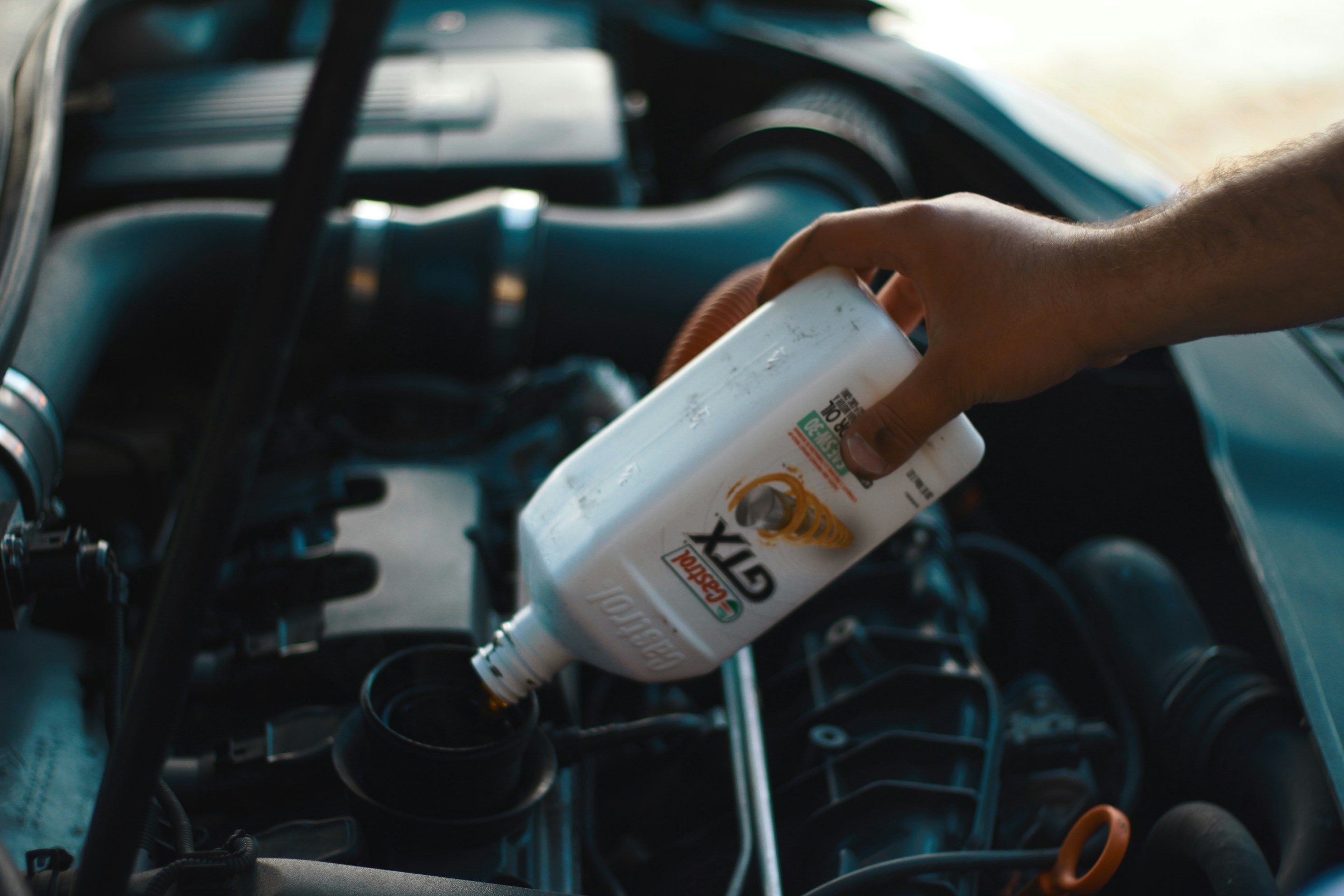
The most common engine oil mistake in South Florida: using SAE 30 single-grade oil year-round because "that's what the manual says." The manual was written for a range of climates. In Palm Beach County, where summer temperatures regularly hit 90–98°F and engine compartment temperatures can exceed 200°F, the right oil choice can mean the difference between an engine that lasts 2,000 hours and one that needs a rebuild at 800.
Understanding Oil Viscosity: What the Numbers Mean
Engine oil viscosity is its resistance to flow. The SAE (Society of Automotive Engineers) rating system uses numbers to describe this. Higher numbers mean thicker oil; lower numbers mean thinner oil.
Single-grade oils like SAE 30 have one viscosity rating that applies across all temperatures. Multi-grade oils like 10W-30 have two ratings: the "W" (winter) rating describes cold-temperature flow, and the second number describes hot-temperature viscosity. So 10W-30 flows like a 10-weight oil when cold and like a 30-weight oil when hot.
For South Florida conditions, the cold-start performance of multi-grade oils is less critical (our "cold" mornings are 65°F, not 20°F). What matters most is maintaining adequate viscosity at operating temperature — which in a Florida summer means an engine running at 200°F+ in 95°F ambient air.
Oil Viscosity and Temperature: The Critical Relationship
All engine oils thin out as they heat up. This is normal and expected — oil needs to flow freely to lubricate moving parts. But if oil thins too much at operating temperature, it loses its ability to maintain a protective film between metal surfaces. Metal-on-metal contact causes accelerated wear, heat buildup, and eventually engine failure.
Oil Viscosity at Operating Temperature (200°F / 93°C)
| Oil Grade | Hot Viscosity (cSt at 100°C) | Florida Summer Rating |
|---|---|---|
| SAE 30 | 9.3–12.5 cSt | ⚠️ Marginal — borderline for extreme heat |
| 10W-30 | 9.3–12.5 cSt | ✓ Acceptable — better cold-start protection |
| 10W-40 | 12.5–16.3 cSt | ✓ Good — recommended for Florida summers |
| SAE 40 | 12.5–16.3 cSt | ✓ Good — preferred for commercial use |
| 15W-50 | 16.3–21.9 cSt | ✓ Excellent — best for high-hour commercial engines |
| Synthetic 10W-30 | 9.3–12.5 cSt | ✓✓ Best — synthetic maintains viscosity better at temp |
Our Recommendations by Engine Type
Air-Cooled Single-Cylinder Engines (Briggs & Stratton, Kohler Command)
→ Recommended: SAE 30 or 10W-30 (conventional)
These smaller engines run at lower RPMs and have less thermal stress. SAE 30 is acceptable in Florida summers, but 10W-30 provides better protection during warm-up. Change oil every 50 hours or once per season, whichever comes first.
Air-Cooled V-Twin Engines (Kawasaki FR/FX, Kohler 7000/EFI)
→ Recommended: 10W-40 or SAE 40 (conventional or synthetic)
V-twin engines run hotter and work harder than single-cylinders. In Florida summers, we strongly recommend 10W-40 or SAE 40 for better high-temperature protection. Synthetic 10W-40 is our top pick for these engines. Change every 50 hours.
Commercial High-Hour Engines (Kawasaki FX, Vanguard EFI, Kohler EFI)
→ Recommended: 15W-50 full synthetic
Commercial engines running 6–8 hours per day in Florida heat need the best protection available. Full synthetic 15W-50 maintains viscosity at extreme temperatures, reduces wear, and extends drain intervals. Change every 100 hours with synthetic. This is what we run in our own shop equipment.
Diesel Engines (Kubota, Yanmar)
→ Recommended: 15W-40 diesel-rated oil (CK-4 or CJ-4)
Diesel engines require oil specifically rated for diesel use. Use a 15W-40 diesel oil meeting API CK-4 or CJ-4 specification. Never use gasoline engine oil in a diesel. Change every 100–150 hours depending on manufacturer spec.
Conventional vs. Synthetic: Is It Worth the Extra Cost?
Full synthetic oil costs 2–3× more than conventional oil. For a small walk-behind mower that uses a quart of oil, the difference is $3–$5 per oil change. For a commercial zero-turn that takes 2 quarts, it's $8–$12 more per change. Is it worth it?
For residential mowers used 1–2 hours per week, conventional oil is perfectly adequate if changed on schedule. For commercial machines running 40+ hours per week in Florida heat, synthetic oil is worth every penny. Here's why:
Better High-Temp Stability
Synthetic base stocks maintain viscosity more consistently at extreme temperatures, providing better film strength when your engine needs it most.
Longer Drain Intervals
Quality synthetic oils can extend drain intervals from 50 hours to 100 hours, cutting your oil change frequency in half.
Reduced Engine Wear
Studies consistently show 30–50% less engine wear with synthetic oil, translating directly to longer engine life.
Better Cold-Start Protection
Even in Florida, early morning starts benefit from synthetic's superior cold-flow properties — less wear during the critical first 30 seconds.
Oil Change Intervals: Don't Push It
The most common oil-related mistake we see in our shop isn't using the wrong viscosity — it's going too long between changes. Engine oil degrades over time from heat, combustion byproducts, and contamination. In Florida's heat, degradation happens faster than in cooler climates.
| Usage | Conventional Oil | Synthetic Oil |
|---|---|---|
| Residential (1–3 hrs/week) | Every 50 hours or once per season | Every 100 hours or once per season |
| Prosumer (4–8 hrs/week) | Every 50 hours | Every 75–100 hours |
| Commercial (40+ hrs/week) | Every 50 hours | Every 100 hours |
| New engine break-in | After first 5 hours (all types) | After first 5 hours (all types) |
Signs Your Oil Needs Changing Now
- Oil on the dipstick is black or very dark brown (should be amber to light brown)
- Oil has a gritty texture when rubbed between fingers
- Oil level is low — if you're adding oil between changes, investigate for leaks or consumption
- Engine is running hotter than usual or oil pressure light is on
- You can't remember the last time you changed it
Need an Oil Change or Full Tune-Up?
Our technicians use the correct oil for your specific engine and climate. We stock Kawasaki, Kohler, and Briggs-approved oils in the right viscosities for South Florida conditions. Same-week service available.
Book a Service Appointment →