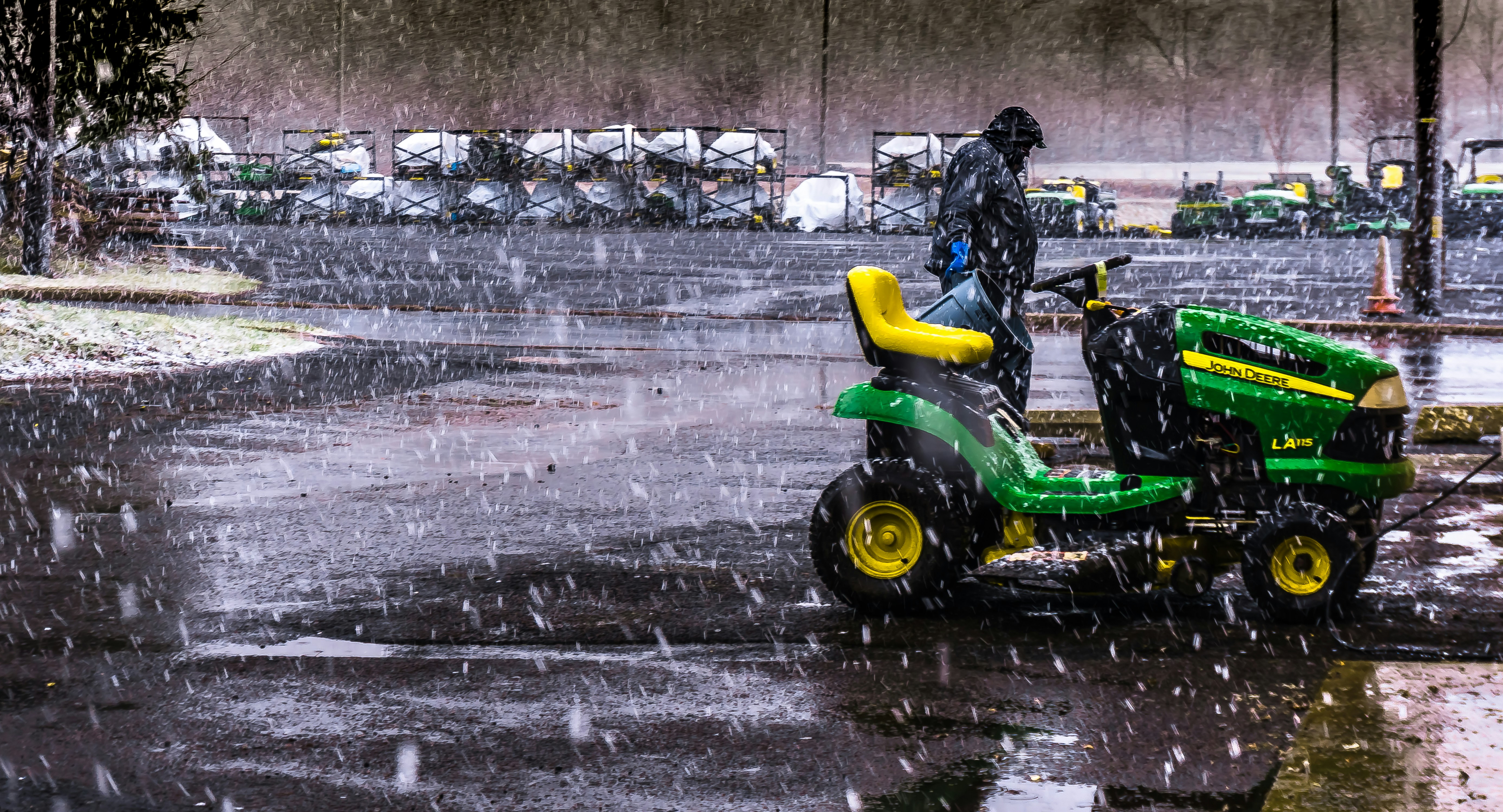
Florida's rainy season runs June through September — four months of near-daily afternoon thunderstorms, high humidity, and saturated soil. For your lawn mower, this is the most punishing time of year. Moisture accelerates rust, promotes belt cracking, corrodes electrical connections, and breeds mold in air filters. A little preparation now prevents a lot of expensive repairs later.
Why Moisture Is Your Mower's Biggest Enemy
Most mower components are designed to handle occasional wet conditions — but South Florida's rainy season is relentless. Humidity alone (regularly 80–95% in summer) is enough to cause corrosion on exposed metal, degrade rubber components, and promote rust inside fuel tanks and carburetors.
Add to that the reality that many homeowners and landscapers mow wet grass during the rainy season — because if you waited for dry conditions, you'd never mow at all. Wet grass clippings pack under the deck, trap moisture against metal surfaces, and accelerate corrosion dramatically.
In our shop, we see a predictable spike in service requests every August and September — belts that have cracked from moisture exposure, spindle bearings that have seized from rust, and carburetors gummed up from ethanol-blended fuel absorbing water. Most of these repairs are preventable.
Pre-Season Checklist: Before June Hits
The best time to prepare for the rainy season is late May — before the storms start. Here's what our technicians recommend:
Replace the Air Filter
A clogged or moisture-damaged air filter restricts airflow to the engine, causing rich running, hard starting, and increased fuel consumption. Paper filters should be replaced annually; foam pre-filters can be cleaned with soap and water, dried completely, and lightly oiled. During the rainy season, inspect your air filter monthly — wet grass clippings can clog it in just a few mowing sessions.
Inspect and Replace Drive Belts
Rubber drive belts degrade faster in high humidity. Look for cracking, fraying, glazing (shiny surface), or stretching. A belt that looks "okay" in spring may fail under the stress of wet, heavy grass in July. Replacing a belt proactively costs $15–$40. A belt failure in the field can mean a $150+ repair call plus downtime. For commercial operators, carry a spare belt on your trailer.
Grease All Zerks and Pivot Points
Grease fittings (zerks) on spindles, deck lift arms, and wheel hubs need fresh grease before the wet season. Water displaces old grease and causes metal-on-metal contact. Use a quality lithium-based grease and pump each fitting until fresh grease appears at the seal. On commercial mowers, this should be done every 25 hours regardless of season.
Check the Fuel System
Ethanol-blended gasoline (E10, which is standard at most Florida gas stations) absorbs water from the atmosphere. During the rainy season, this process accelerates. Use a fuel stabilizer like STA-BIL in every tank. Consider switching to ethanol-free fuel (available at some marinas and specialty stations) for your mower — it costs more but dramatically reduces carburetor issues.
Inspect the Deck for Rust and Damage
Scrape the underside of your deck clean and inspect for rust spots. Light surface rust can be treated with a wire brush and rust-inhibiting paint. Deep rust that has eaten through the deck metal is a structural problem — the deck may need replacement. Apply a coat of deck spray or vegetable oil to the underside to reduce grass buildup and slow rust formation.
Test the Battery and Charging System
Humidity accelerates battery terminal corrosion. Clean terminals with a wire brush and apply dielectric grease. Test battery voltage — a healthy 12V battery should read 12.6V or higher at rest. If your battery is more than 3 years old, consider replacing it proactively. A dead battery in the middle of rainy season means your mower sits while your lawn grows.
During the Rainy Season: Best Practices
Mow Before the Rain
If possible, mow in the morning before afternoon storms. Dry grass cuts cleaner and puts less stress on the engine and blades.
Clean the Deck After Every Use
Wet clippings pack under the deck and trap moisture. Rinse the underside with a garden hose after each mow and let it dry before storing.
Store Under Cover
Even a basic tarp is better than leaving your mower exposed. Moisture on the engine, electrical components, and frame accelerates wear significantly.
Check Tire Pressure Weekly
Temperature swings and moisture cause tire pressure to fluctuate. Uneven pressure causes scalping and uneven cuts. Check and adjust weekly.
Never Mow Flooded Areas
Mowing through standing water can hydrolock the engine, damage the electrical system, and cause the mower to sink into soft soil. Wait until water drains.
Inspect Blades More Frequently
Wet, heavy grass dulls blades faster. During rainy season, inspect blade sharpness every 15–20 hours instead of the usual 25.
Signs Your Mower Has Moisture Damage
Even with good preparation, moisture damage can occur. Here are the warning signs to watch for:
- Hard starting or engine won't start — often a sign of water in the fuel or a corroded ignition system
- Rough running or surging — carburetor may have water contamination or varnish buildup
- Excessive vibration — could be a bent blade from hitting a submerged object, or a seized spindle bearing
- Belt slipping or squealing — moisture-glazed belt or a pulley with surface rust
- Electrical issues (no start, no spark) — corroded connections or a moisture-damaged ignition module
- Rust streaks on the deck or frame — surface rust that needs immediate treatment to prevent spread
Schedule Your Pre-Rainy Season Tune-Up
Our certified technicians perform a comprehensive 15-point inspection and service. We'll catch problems before they become expensive repairs. Book your appointment before June — our schedule fills up fast.
Book a Service Appointment →