The Florida paradox: Because our winters are mild, most homeowners skip winterization entirely — and pay for it in spring. Fuel degradation, carburetor gum, battery drain, and corroded terminals are the top four reasons Palm Beach County residents bring us mowers in March that "just won't start." Every single one of those repairs is preventable with 45 minutes of off-season prep.
Why Winterization Still Matters in South Florida
Palm Beach County doesn't get frost, but it does get a distinct slow season. From late November through February, most residential lawns slow dramatically — Bahia, St. Augustine, and Zoysia all go semi-dormant. Mowing frequency drops from weekly to once every three to four weeks, or stops entirely for some homeowners.
That extended idle period is where the damage happens. Modern gasoline — especially ethanol-blended E10 fuel — begins to degrade in as little as 30 days. The ethanol absorbs moisture from the air, the lighter fractions evaporate, and what's left is a varnish-like residue that coats carburetor jets, fuel lines, and float bowls. A mower that ran perfectly in October can be completely non-starting by March.
Beyond fuel, the high humidity of South Florida winters accelerates corrosion on electrical connections, battery terminals, and exposed metal surfaces. Deck belts left under tension develop flat spots. Blades left dirty develop rust pitting. None of these are catastrophic individually, but together they add up to a mower that needs a $200–$400 spring service instead of a $0 pre-storage checklist.
The Complete South Florida Winterization Checklist
Work through this list in order. The entire process takes 45–60 minutes for a walk-behind and about 90 minutes for a zero-turn or riding mower.
Run the Engine Dry or Add Fuel Stabilizer
This is the single most important step. You have two options: run the engine until it stalls from fuel starvation (completely empty the tank and carburetor), or add a quality fuel stabilizer like STA-BIL or Sea Foam to a full tank and run the engine for 10 minutes to circulate the treated fuel through the entire system. We prefer the stabilizer method for carbureted engines — running completely dry can leave residue in the carburetor bowl. For fuel-injected engines (newer EFI models), the stabilizer method is the only option.
Change the Engine Oil
Don't store your mower on old oil. Used oil contains combustion byproducts, acids, and metal particles that continue to corrode engine internals during storage. Drain the old oil while the engine is still warm (better drainage), replace the oil filter if your engine has one, and fill with fresh oil of the correct viscosity for your engine. In South Florida, 10W-30 or 10W-40 is appropriate for most engines. See our Engine Oil 101 article for specific recommendations by engine type.
Always dispose of used oil responsibly. Most auto parts stores accept used oil for free recycling.
Replace the Air Filter
A clogged air filter stored over winter becomes a breeding ground for mold and insects in Florida's humidity. Replace paper air filters — they're inexpensive ($5–$15) and a fresh filter ensures your engine breathes clean air at the start of next season. Foam pre-filters can be washed with dish soap, dried completely, and lightly oiled before reinstalling. Never store a mower with a wet foam filter.
Inspect and Sharpen or Replace Blades
Off-season is the ideal time for blade maintenance because you're not in a rush to get back to mowing. Remove the blades, inspect for cracks or severe nicks (replace if found), and sharpen to a 30–35 degree cutting edge. Reinstall with the correct torque — most residential blades require 35–50 ft-lbs, commercial blades 60–80 ft-lbs. Loose blades are a serious safety hazard. If you're not comfortable sharpening blades yourself, bring them to our shop — we sharpen blades while you wait.
Clean the Deck Thoroughly
Grass clippings trapped under the deck retain moisture and accelerate rust. Use a deck scraper or putty knife to remove all buildup, then rinse with a garden hose. Let the deck dry completely before storage — never store a wet mower. Once dry, apply a light coat of WD-40 or a dedicated deck spray to bare metal surfaces to prevent rust formation during storage.
Disconnect or Maintain the Battery
Batteries self-discharge during storage. In Florida's heat, this process is accelerated. You have three options: (1) Disconnect the negative terminal and store the battery in a cool, dry location, checking voltage monthly. (2) Connect the battery to a smart trickle charger (Battery Tender or similar) that maintains charge without overcharging. (3) Leave it connected and accept that you may need a jump start in spring. Option 2 is our recommendation for zero-turns and riding mowers. For walk-behinds with electric start, option 1 is fine.
Lubricate All Grease Points
Consult your operator's manual for all grease fittings (zerks). Common locations include spindle bearings, front axle pivots, wheel bearings, and deck lift linkages. Use a quality grease gun with the correct grease type — most outdoor power equipment uses NLGI #2 lithium-based grease. Proper lubrication before storage prevents corrosion from forming on bearing surfaces during the idle period.
Check and Inflate Tires
Tires lose pressure over time, and a flat-spotted tire from months of storage can cause vibration and uneven cutting. Inflate all tires to the pressure listed on the sidewall or in your manual. For zero-turns, equal tire pressure on the drive tires is critical for straight tracking. If a tire won't hold pressure, have it repaired or replaced before storage — a slow leak becomes a flat over three months.
Store in a Covered, Ventilated Space
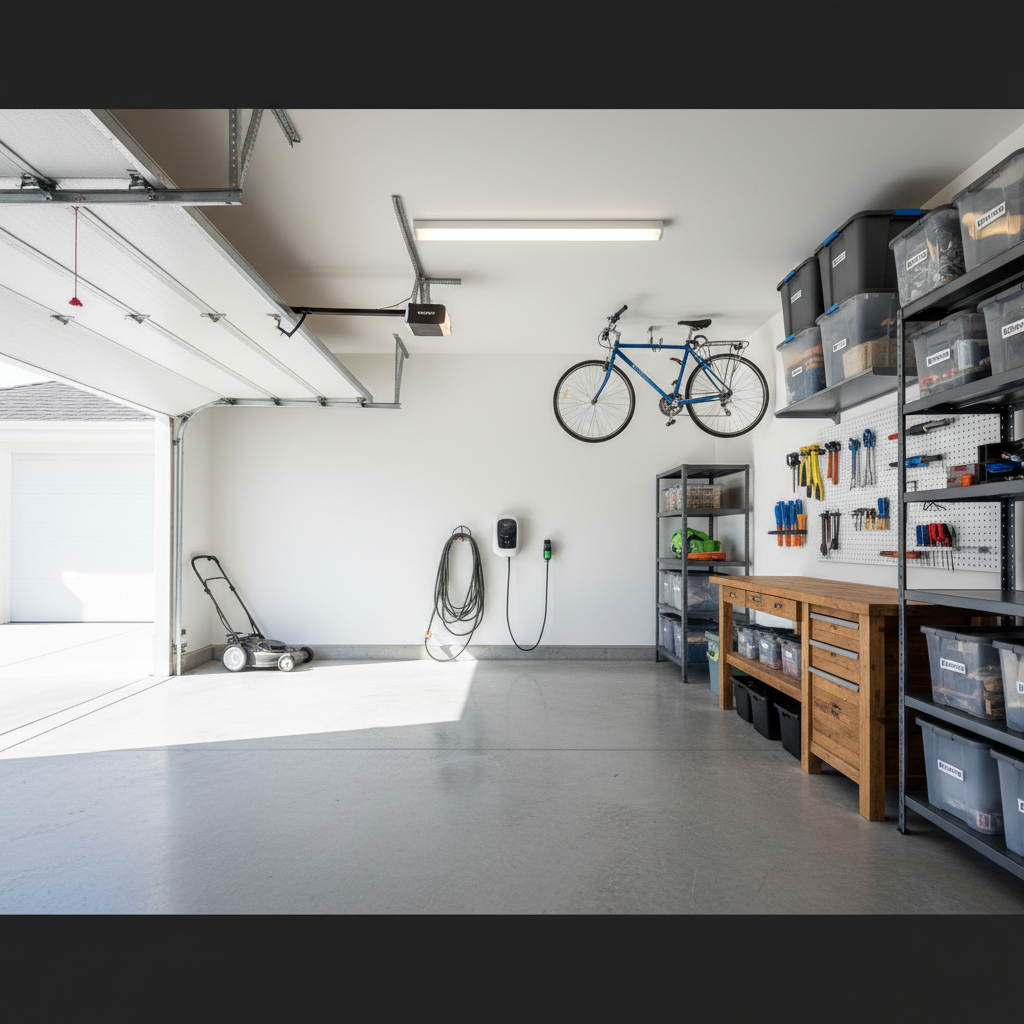
South Florida's humidity makes covered storage essential. A garage, shed, or carport is ideal. If outdoor storage is unavoidable, use a breathable mower cover — not a plastic tarp, which traps moisture and accelerates corrosion. Elevate the mower slightly if storing on a concrete floor, as concrete wicks moisture. Never store a mower near fertilizers, pesticides, or pool chemicals — the fumes accelerate corrosion on metal components.
Florida-Specific Storage Concerns
South Florida presents unique storage challenges that homeowners in other states don't face. Here's what to watch for specifically in Palm Beach County:
Humidity & Corrosion
Palm Beach County averages 75% relative humidity year-round. This accelerates rust on blades, deck surfaces, and electrical connections. Silica gel packets placed near the engine and electrical components can help absorb excess moisture in enclosed storage.
Pest Intrusion
Mice, lizards, and insects love to nest in warm engine compartments and air filter housings. Stuff a rag loosely in the exhaust outlet and air intake to deter pests. Remove the rag before starting in spring.
UV Degradation
Florida's intense UV radiation degrades rubber components — belts, tires, and fuel lines — faster than in northern states. Store out of direct sunlight whenever possible. Inspect all rubber components for cracking before the new season.
Ethanol in Fuel
Florida gas stations sell E10 (10% ethanol) as standard. Ethanol is hygroscopic — it absorbs water from the air. This is why fuel stabilizer is non-negotiable in Florida storage. Consider using ethanol-free fuel (available at some marinas and specialty stations) for small engines.
Spring Startup: What to Check Before the First Mow
Even with proper winterization, run through this quick checklist before your first mow of the season:
- Check oil level — top off if needed, verify oil is clean and at the correct level
- Inspect the air filter — replace if it looks dirty or was not replaced before storage
- Check tire pressure — inflate to spec before mowing
- Inspect all belts for cracking, fraying, or glazing — replace any that look worn
- Remove the exhaust and intake rags if you placed them before storage
- Check blade condition — verify blades are tight and sharp before cutting
- Reconnect the battery and test the charging system if applicable
- Run the engine for 5 minutes at idle before mowing to allow oil to circulate and engine to warm up
When to Bring It to the Shop Instead
Some pre-storage or post-storage issues are beyond a DIY fix. Bring your mower to Palm Beach County Mowers if you encounter any of the following:
Shop-Level Issues
Carburetor won't start after stabilizer treatment
Carburetor cleaning or rebuild — $75–$150
Engine knocking or unusual noise
Internal engine inspection — may indicate bearing or rod damage
Deck spindle wobble or grinding
Spindle bearing replacement — $80–$200 per spindle
Hydrostatic transmission sluggish or not engaging
Hydro fluid change or pump inspection
Battery won't hold charge after trickle charging
Battery replacement — $40–$120 depending on size
Fuel line cracking or leaking
Fuel line replacement — $30–$80
Let Us Handle Your Pre-Storage Service
Our certified technicians perform a complete end-of-season service — oil change, blade sharpening, air filter, fuel treatment, and full inspection — so your mower is ready to go when spring arrives. Serving Boca Raton, Delray Beach, Boynton Beach, and all of Palm Beach County.
Book a Pre-Storage Service →